



5 Signs Your Buick Needs Immediate Service
Catching the early warning signs that your Buick needs immediate attention can save you money and further problems down the road. That’s why knowing when your car needs attention right now matters so much to your budget and your safety while driving around Youngstown. Let’s look at five signs your Buick needs immediate service so you know when to act fast to prevent costly repairs.
Sign No. 1: Dashboard Warning Lights That Demand Immediate Attention
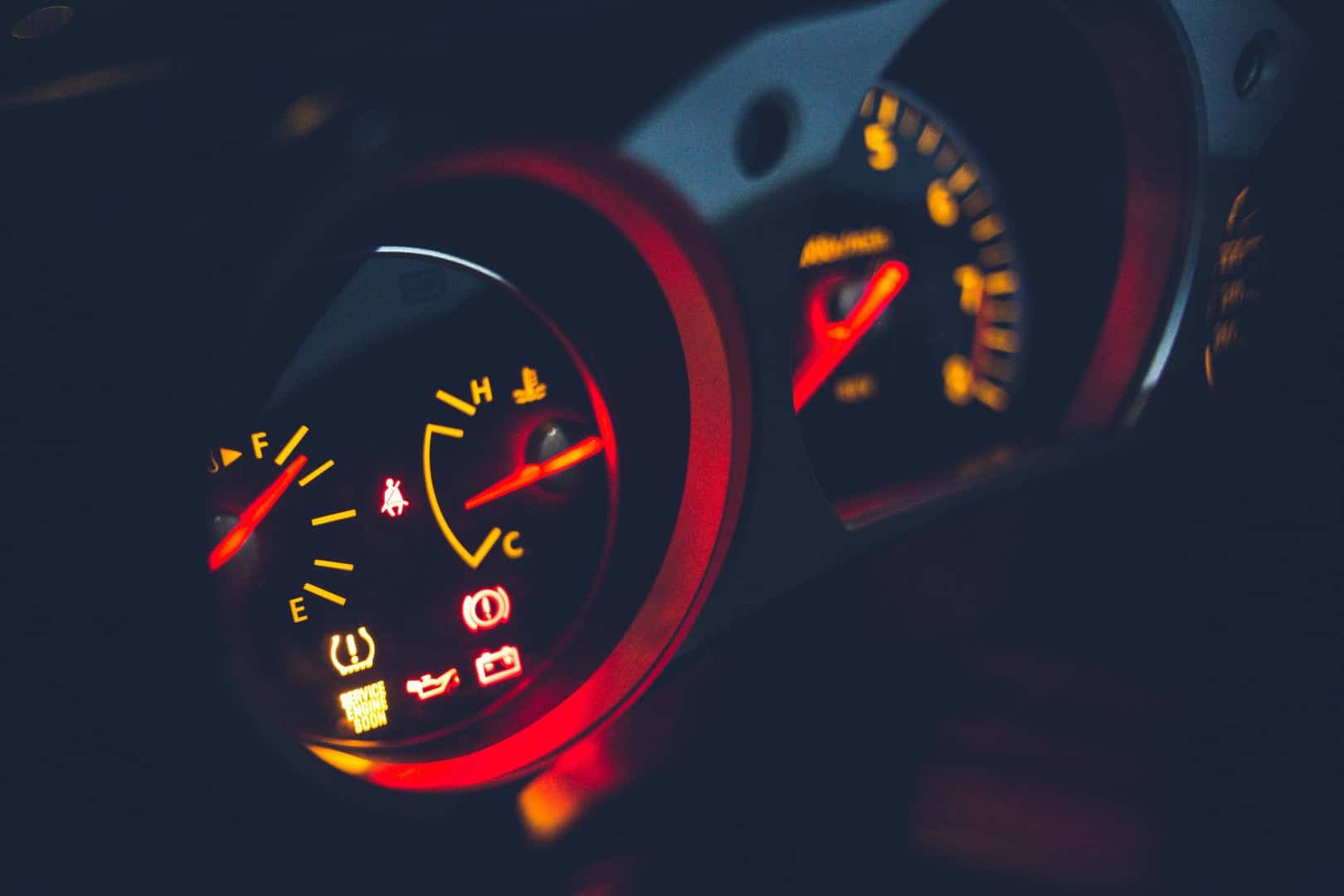
Fuel gauge on dashboard in contemporary automobile by Erik Mclean is licensed with Pexels License
Your Buick’s dashboard provides you with early warning signs of car problems. Red lights mean “stop now.” Yellow or orange means “check soon.” Green or blue just shows systems working. The dashboard covers all kinds of messages from seat belt alerts to tire pressure warnings, each telling you what’s happening with your car.
Oil pressure and transmission temperature alerts require urgent action. Oil pressure lights may indicate insufficient oil pressure, which can lead to engine damage. Transmission temperature warnings mean your gearbox is overheating from the inside. Battery warnings indicate electrical problems and can be signs that your alternator is going out.
Sign No. 2: Unusual Noises That Signal Serious Problems
Unusual noises can also be a sign of a car problem. Engine knock means preignition from cheap gas, carbon buildup, or ignition problems, and can damage engines fast. Grinding indicates failing bearings or components, while rattling suggests loose timing chains needing immediate repair.
Squealing during startup or acceleration indicates a worn or damaged serpentine belt. If it breaks, you can lose power steering and battery charging, and the engine may overheat. Brake squealing from worn pads leads to rotor damage and potential brake failure.
Clunks, creaks, or grinding during turns signal steering and suspension trouble. Ticking sounds indicate low oil or worn spark plugs, causing misfires.
Sign No. 3: Fluid Leaks and Contamination Issues
Puddle colors reveal what’s leaking. Engine oil starts light brown but darkens with age, smelling burnt and dripping under your car’s center. Oil leaks cause inadequate lubrication, overheating, worn bearings, damaged pistons, or cracked engine blocks, requiring costly repairs or complete engine replacement.
Coolant appears yellow, green, or pink with a sweet smell from the radiator, water pump, or reservoir areas. Coolant leaks cause engine overheating, head gasket damage, or warped cylinder heads, with overheating occurring suddenly and posing significant risks.
Leaking transmission fluid is usually red, smells sweet or burnt, and appears around your car’s middle. Clear to yellowish brake fluid leaks from brake lines or the master cylinder. It can reduce stopping power, increase braking distance, and cause a soft or spongy brake pedal feel, with the brake system dashboard warning light coming on.
Sign No. 4: Performance Problems That Indicate System Failures
Hard starting, stalling while driving, and a power loss signal are serious problems. Extended cranking or engines that start then die can worsen over time, creating dangerous situations.
Fuel system issues include cranking without starting, acceleration sputtering, sudden power loss, random stalling, tank area whining, and poor fuel economy.
Sign No. 5: Handling and Safety Concerns That Require Immediate Action
If your steering is hard to control or your wheels vibrate, it could be because of power steering problems, alignment problems, or worn suspension. If your automobile pulls to one side, it could mean that the tires, alignment, brakes, or suspension are bad, which makes driving safely hard.
Symptoms of brake shaking include sensations in the steering wheel, pulsating through the brake pedal, and shaking in the front end. This is generally caused by warped brake rotors from braking hard too often or being too hot. Some common problems with brakes are squeaking or grinding noises, spongy brake pedals, a brake pedal that is too low to the floor, pulling to one side when braking, and vibrations in the steering wheel or brake pedal.
Soft brake pedals mean air in lines, fluid leaks, or system failure. Electronic ABS, stability control, or traction control malfunctions remove safety nets during emergencies. Worn brake pads create metal-on-metal contact, destroying rotors, while worn suspension components amplify vibrations and affect handling. These issues require immediate attention for safety.
What To Do When You Notice These Warning Signs
When problems such as brake issues, steering trouble, or overheating occur, pull over immediately and wait for help. Minor issues, such as dashboard lights, can wait until you reach a service center, but avoid highways and long trips.
During roadside emergencies, stay calm, check for injuries, and call 911 if needed. Move to safety if possible, and set up warning signals using hazard lights. For roadside breakdowns, pull over safely to the shoulder, activate your hazard lights, stay inside the vehicle with your seatbelt on if on busy highways, and contact reliable roadside assistance.
Before calling our service center, document symptoms: when problems occur, conditions that affect them, and patterns observed. Good notes help our techs diagnose problems faster, saving you diagnostic costs.
FAQ About Buick Service Needs
Here are the answers to some FAQ about servicing your Buick.
How Often Should I Get My Buick Serviced?
Buick recommends getting your vehicle serviced every 7,500 miles. That includes an oil and filter change, a tire rotation, and a multipoint inspection. New Buick owners get their first scheduled service free.
Can I Drive With My Check Engine Light On?
A steady light indicates minor issues such as a loose gas cap, so it can wait until you reach a service center. A blinking light shows a serious problem that could damage your engine, so pull over immediately and get assistance. When in doubt, getting towed costs way less than a new engine.
How Much Are Maintenance Costs?
Buick owners spend about $608 yearly on maintenance, slightly lower than the average for all cars. Your warranty covers three years/36,000 miles bumper-to-bumper and five years/60,000 miles on the powertrain. J.D. Power ranked Buick as the second-most reliable brand in 2025, just behind Lexus.
Trust the Experts at Cochran Buick GMC Youngstown for Your Service Needs
Watching for these five warning signs saves cash and keeps you safe on Ohio’s roads. Don’t let small problems grow into budget-busting nightmares or safety risks. If you spot any of these warning signs, give us a call.
We’ve been fixing cars in Youngstown for almost 100 years and are ready to help keep your Buick running safely for years to come. Reach out to #1 Cochran Buick GMC Youngstown today to book your appointment and see why our century of experience makes all the difference.
0 comment(s) so far on 5 Signs Your Buick Needs Immediate Service